Wednesday, April 24, 2019

How can a dental lab compete today without a professional presence? The fact is, either you’re visible, or you’re invisible. We’ve become a visual society that demands instant access to information. This is why it's imperative to keep your savvy customers in mind when developing your company and dental lab branding.
Some dental lab owners will tell you that they just don’t have the time, resources, or budget to invest in marketing materials, and they plan to continue as they always have. But in today's economy and technology-driven age, your business cannot afford NOT to change with the times.
While word-of-mouth used to be the best form of marketing, times have changed drastically. Technology has reshaped the way we do business in the dental lab industry. Many of your customers are focusing on vendors who offer website interaction, a social media presence, and professional videos and marketing materials.
In order to compete with dental labs that offer the same quality of products and services, it is imperative that your lab demonstrates a strong professional presence. This forces dental professionals to change or risk becoming extinct.
Using an outdated website and/or poorly designed marketing materials will only give your competition a marketing advantage. Worst of all, the absence of a strong professional presence, business brand identity, and most importantly, an online business, makes you just plain … invisible.
You still have the choice to take charge of your destiny
DentalLabSupport.com, an exclusive sales & marketing agency for labs can help to bridge the gap between the professional side of dentistry and the digital age of marketing by offering creative media and online business solutions to the dental lab industry, from concept to completion.
Understanding the needs of busy dental labs, DentalLabSupport.com believes that each project should be approached differently and customized to match the client’s needs. By working with a professional company like DentalLabSupport.com, a dental lab can create concepts that translate across multiple types of platforms, such as traditional marketing media, online business websites, videos, social media networks, photography, graphic design, motion graphics, company identity branding, trade show banners, events graphics, and more. 
Companies such as DentalLabSupport.com work to find real solutions that help your dental lab be as successful as possible.
For more information about dental lab marketing, contact DentalLabSupport.com or call 888.715.9099 for a free consultation. 
Image result for measuring seo
One of the biggest challenges in SEO is measuring impact — we know what matters (or doesn’t matter) until the rules of the game have changed. And when they do, we’re all scrambling to find a baseline again. 
We decided to put together a list of what we consider to be steadfast SEO recommendations for your dental lab. This list has yielded wins for a number of our clients — they had an impact that we were able to identify and quantify — and might be useful to you and your clients. While not all of them may be applicable (they should ultimately be tailored to your dental labs site’s specific needs) I will provide further details and examples of what I mean within each.
Here are the five SEO recommendations that  we have consistently seen make a positive impact in dental laboratory SEO's ever-changing world.

1. Structured data matters

The short explanation of why structured data is helpful is that it tells crawlers what there is within your page. If you are not familiar with this you can follow this helpful Structured Data guide to get you quickly up and running.
This is a clear example of tailoring the advice to your site’s needs and industry — I have consistently seen structured data making a positive impact for clients in different industries, but different structured data will be required for different sites and pages within the site.
Below, I show the increase in impressions that occurred after we updated the information included on structured data of product pages. In this case, the correct type of structured data was already selected, but the information given to it was incomplete or inconsistent with what was on page:
Above is an anonymized graph of a client’s impression performance during a month after the structured data update.
Here are the industries where I’ve seen structured data being useful:
  • Jobs/recruiting
  • Events
  • Beauty services
Structured data makes it faster and easier for crawlers to understand the information within the page, making it a powerful (but often misused) tool. If applied correctly, it will make quite a positive impact on your pages.
Here are a few additional steps to help you get started:
  • Follow Google’s recommendations on SD
  • Test things out 
  • Check your competitor's page’s structured data

2. Page freshness

Your page’s freshness is determined by multiple factors, but simply having a date on a page is one of the easiest ways to indicate to Google how fresh your page is. This applies to blogs and news, but it’s also relevant for product pages related to dates, such as event sites.
If you think about page freshness from a user perspective, it’s easier to understand why it matters so much. When you obtain search results that have an old date, such as articles, depending on the subject, you might consider them less relevant than if they had a recent date. Crawlers know this too and have the ability to differentiate between fresh and old content whether it has a date or not.
For one of our clients in the dental lab industry, an old date took a toll on their rankings. After updating their page’s content to ensure it was search relevant, we went through and made sure no content within the page (i.e. page copy or text at the bottom of the page) was referring to older dates. We also updated the date on structured data to match the new date.
After the update, we observed improved ranking on SERP results, which doubled impressions and CTR.
Page freshness matters for any industry, and while dates are helpful, your content freshness should always reflect and target what users are searching. Here are a few other things to consider if you think you may need to refresh your pages:
  • How often have you conducted keyword research in the last 18 months and updated your page’s content based on keywords results?
  • Are you featured on SERP results with dates and if so how old are these dates?

3. Internal linking (still matters)

The right balance of internal linking is never a straightforward answer, so I am not here to advise you on the absolute right way to do it. However, I am here to tell you that not having too many links on one page can make a positive impact.
For example, linking to all categories from your homepage could be the best user experience or the fastest way for crawlers to discover your pages but it will also impact the amount of equity the page is sending to all the pages it links to.
If all of your category pages are crawled and indexed, as was the case for my client, you can decide to link from the homepage only to specific categories or services. There are many factors to consider when changing how you internally link from the homepage, some of which are:
  • Likelihood of these pages to better compete
  • Revenue that comes from these pages
When we recommended a change in internal linking to one of our clients in the personal beauty service industry, we saw an overall 21 percent increase in sessions from the previous month for the site as a whole. About half of these came from the category pages we kept a link to, which offset any loss in session from the category pages we excluded.
Balancing internal linking is definitely an important ranking factor because it will dictate how users and crawlers discover your pages. If you are revisiting your site’s internal linking, or think that your client should, my colleague Shannon wrote this helpful guide on the subject that covers all the various aspects of balancing internal linking for SEO.

4. Title tags

Changing your title tags and finding out if they made a positive impact can be quite difficult to prove. At DentalLabSupport, our clients can easily test and measure how a different title made a positive or negative impact. We have tested this many times for clients in different industries, and changing a title has always changed (positively or negatively) the amount of session variant pages were getting.
How you change your title will depend on your page type, so there is no absolute rule on what to change a title to. In my client's case, we’ve positively tested the following changes:

Include the year in the title, which also signals freshness. 

    Here is an example we made up:
    Original title: “Book a Trip to Hawaii Now | [brand name]”
    Changed title: “Hawaii Trips 2019/2010 | Book Now | [brand name]”

    Include the lowest product price of the page, for example:

      Original title: “Cheap Flights to Hawaii - [brand name]”
      Changed title: “Cheap Flight to Hawaii from $400 - [brand name]”
      We also tested these following changes, which had a negative result in terms of the number of sessions:
      • Adding the number of products for sale on the page to the title tag
      • Adding emojis to the title tag
      The successful tests were measured in the travel industry particularly, while the negative tests occurred in the fast fashion industry. Specifically, through the ODN platform, we measured a 7 percent increase in sessions for pages with a year or price in the title.
      What you change your title to will depend on many factors, so a year or price might not help in your case. However, if some of your category pages have seasonal products or your industry competes heavily on prices, adding the year — or date, if applicable — or a price in the title could be quite beneficial.

      5. Obtain backlinks

      One thing that consistently helped my clients to obtain external links is creative pages — not shocking, I know. These are usually interesting articles or campaigns related to the business, not commercial pages (pages that are just trying to sell something), and they end up obtaining quite a lot of coverage from different sources and, subsequently, external links.
      Building successful creative pages are not easy and won’t guarantee that an increase in any specific amount of backlinks, but it’s one of the safest ways to obtain organic backlinks. The process can also be quite expensive for big pieces but we’ve also experienced a positive impact with more lightweight pieces on a smaller budget.
      If your budget or your client’s budget is on the modest side, you can still create a great piece. Here are a few tips to achieve that:
      • Think about the data you have collected and what insights it might have for users who do not have access to it: can you spot trends and patterns that could be interesting for a wider audience?
      • Surveys: you can certainly reach an audience to ask questions on a topic you want to create a piece of content for. If you can’t reach an audience for free, you can do this cheaply through paid surveys and collect your data this way.
      • Hire freelancers: there is a lot of great talent you can scout on sites like DentalLabSupport.com to help you create a visually enticing piece

      Wrapping it up

      Measuring the impact of SEO changes is a consistent challenge and not every SEO technique you throw at content will work. My hope is that this short list can provide you with some ideas and directions on things to consider when helping your site or your clients. As I mentioned above, these are not hard written rules, but they are the ones worth their weight and are certainly worth analyzing for the sites you are working on.
      For more information about Dental Lab SEO contact DentalLabSupport.com for a free consultation. Call 1.888.715.9099 today!

      Thursday, January 17, 2019

      Target the Right Audience with Buyer Personas


      For any dental lab marketing to be successful, you need to know who you are speaking to - your ideal buyers.  In Inbound, Buyer Personas are used to define semi-fictional representations of your ideal customer.

      These profiles are developed from market research and real data about your existing customers (through surveys, interviews, information from departments like sales, customer service etc.). They include demographics, communication preferences, background (personal and career), challenges, goals, definition of success etc.

      Depending on your business, you may just have as few as one or two personas, or as many as 10 or more.

      Tip: If you're new to developing personas for your business, then make sure you walk before you can run. Start with 1-3. You can always create more personas later once you get the key ones together.

      Having well-researched personas, will allow you to personalize and target your marketing. Example, you can define campaigns for a specific buyer persona, segment your lead list by buyer persona and tailor your messaging according to what you know about those different personas.

      Here are more detailed examples of the types of data you need to collect for your personas:
      Personal Background:
      • Age
      • Family (single, married, children)
      • Education
      Company
      • What industry does their company work in?
      • What is the size of their company?
      • What's their annual revenue?
      Role
      • What is their job title and what does their role encompass?
      • How is their performance/success measured? 
      • What is a typical day like - what tasks do they complete?
      • What skills are required to do their job?
      • What knowledge and tools do they use to complete important tasks?
      • Who do they report to? Who reports to them?  How many?
      Goals
      • What are their main responsibilities?
      • What does it mean to be successful in their role? How do they define success?
      Challenges
      • What are their biggest challenges and pain points?
      • How do they overcome these challenges today?
      Hangouts
      • How do they learn about new information for their job?
      • What publications do they regularly read?
      • What blogs do they follow?
      • What associations do they belong to?
      • What social networks are they active on? 
      Shopping Preferences
      • How to they prefer to interact with vendors (email, phone, in person?)
      • Do they use the internet to research vendors or products? 
      • How do they search for information? 
      • What types of websites do they use?

      For more information about Buyer Personas contact DentalLabSupport.com or call 888-715-9099


      Tuesday, January 8, 2019

      How advanced features like call recording prove ROI

      Related image

      In our quest for bigger and better sources of marketing data, it’s all too easy to get stuck on the analytics treadmill and ignore the information that’s you’ve already collected. Fortunately, when you use advanced call tracking software to analyze your campaigns, the information you need to achieve superior ROI is often right at your fingertips.

      And one of the DentalLabSupport's features that best demonstrates how marketing tech can empower you to work smarter, not harder, is Call Recording. With our call recording features activated for your account, you’ll be able to play back recordings of every single call that comes in to your tracking numbers.
      This is a great way to get an at-a-glance view of how your phone team is performing, but the usefulness of this feature far exceeds surface-level analytics.

      Don’t let a single call slip through the cracks

      During our many case studies, we heard a lot about how powerful call recording can be when used in conjunction with our DLS call tagging system.
      With our comprehensive tagging system, you can quickly and easily categorize calls — like new leads, repeat callers, and missed calls —  and then identify those that should be reviewed for deeper analysis.

      Proper categorization of inbound calls is a powerful way to prove the value of the work your agency does for clients. For example, with a thoughtful tagging and analysis scheme for your data, combined with a careful review of the corresponding call recordings, you can demonstrate how your campaigns have resulted in a steady increase in calls that deliver qualified leads for your client. Or, perhaps your advice on efficiency has helped a client pare down the number of missed calls per month, resulting in fewer frustrated voicemails from prospects.
      In both cases, this can be a powerful demonstration of the value — and the ROI boost — your work is delivering for your client. And even better, much of this tagging work can be automated when used in concert with our suite of Conversation Intelligence automation tools.

      Identifying and filling skill gaps

      Beyond tagging, call recordings are also a supremely useful resource by themselves. Your agency might not have considered that call coaching could be a selling point for clients, but we’ve seen plenty of testimony from DentalLabSupport users that suggests otherwise.

      With call recording enabled for the client’s account, you can instantly achieve a frontline view of how your dental lab's phone team is performing. By reviewing recordings of inbound & outbound calls, you’ll be the first to know whether the client’s team is sticking to the script and performing well, or whether there are skill gaps that are causing prospects to drop out of the sales funnel.

      Let’s say that your dental laboratory is getting a healthy number of inbound calls, but you’ve crunched the numbers and it seems like prospects just aren’t converting at the rate they should. This is a perfect time to dive into the call recordings and see whether your phone team is having trouble sticking to the script, or effectively conveying their product’s value to callers.

      By listening to call recordings, your dental laboratory can then take a direct hand in shaping how the call team is performing. Perhaps the sales script needs some tweaking, in order to better reflect the search keywords that are driving the most calls. If many callers are searching for a specific feature before calling, but the call recording then reveals that the feature isn’t part of the sales team’s usual script, you’ve just identified a key gap that needs to be filled.

      Taking a comprehensive, hands-on approach when it comes to call recording will do more than just help your dental labs's bottom line — it provides real proof that your dental lab is driving results.

      Here at DentalLabSupport.com we’re constantly developing innovative new tools like Account Center, which helps your dental labs marketing team manage multiple clients with simplicity and ease.


      Building client partnerships that last

      A careful and considered use of marketing technology can give you a real competitive edge and set you apart from other dental laboratories, who are always looking to entice clients away from you (IE, the competition). With advanced call tracking and analytics in your arsenal, you’ll be well-equipped not just to deliver real value, but also to prove the value of your marketing efforts in a way that establishes trust, and builds relationships that last.

      Interested in seeing the benefits call tracking can bring to your dental lab? request a personalized demo of DentalLabSupport.com Sales & Marketing Platform. Call 888-715-9099 or info@dentallabsupport.com


      Thursday, December 13, 2018

      So why do dental lab sales departments need a CRM?


      Related image


      Without fear of oversimplifying, the biggest challenges that sales people face are 1) how to qualify and follow up on leads and 2) how to prioritize sales activities.
      However, CRM is a tool that not only solves those key problems. In fact, it is able to handle other, no less pressing issues.

      1. Enjoy a safe storage space

      CRM helps sales people to safely and centrally store their contacts, sales opportunities, activities and scheduled plans in one place, and have uninterrupted access to the database from multiple locations. Rest assured that your data won’t just get lost.

      2. Plan and time-manage like a pro

      CRM helps sales people to optimize their daily schedules and prioritize tasks to make sure customers are not ignored and the key prospects are contacted on time. In fact, CRM allows sales people to spend more time with customers, which leads to more deals closed and a stronger customer base.

      3. Activity reports? – No brainer!

      CRM helps sales people to easily prepare their weekly or monthly reports for management. The process is automated and transparent, and takes just a few clicks to inform others about what sales are currently in progress.

      4. Stop surfing, start targeting

      CRM helps sales people to segment data and identify valuable opportunities via criteria based selections. This prevents you from hours of cutting and pasting from various documents, or surfing in the disorganized lists of data.

      5. Stay up-to-date on what’s happening

      CRM offers shared calendars, document templates and e-mail integration, uniting all team members and keeping everyone up-to-date. Sharing selling patterns and processes allows sales people to see what works best. CRM also increases communication between the sales force and sales management.

      6. Show up in time for the new sale

      By tracking all communication with the customers, CRM helps sales people to know exactly when customers need to be contacted; for example, for product replacement, contract renewal, or for an upsell to a new product or service. This all increases your chances of closing a sale.

      7. Rationalize your sales moves

      CRM helps streamline the entire sales cycle, which results in closing deals in your sales pipeline and helping everyone in the team to reach targets faster. Since order processing and preparing quotes is automated in CRM, sales teams are able to reduce production costs and increase sales revenue.

      8. Know what your customers really want

      Since all the customer-related data is stored in CRM, it helps sales people to analyze the needs of customers and even anticipate their problems – all at the right time. All this increases customer satisfaction and ensures loyalty, as well as higher profit margins.

      9. Cut down on admin tasks

      CRM releases the sales teams from the majority of admin tasks by reducing and even removing some of the repetitive actions that take a lot of time, but yield little profitability. CRM stores product and price details, triggers reminders for activities, and takes sales people through the sales pipeline step by step.

      10. Save money

      Even though CRM systems are not cheap, they actually help you save your money! With sales people, it is the reduction of errors (for example, in orders or quotes) that CRM can help with. Effort and cost related to correcting those errors may be much higher. Finally, it also boils down to such trivial things as saving money on those cluttering and often vanishing Post-it notes, since every new information can be safely stored in the system.

      Conclusion

      In a nutshell, sales people and CRM is not an immediate “match made in heaven”, but the more time these two spend together – the stronger the attraction between them becomes.
      If adopted and used correctly, CRM is going to boost the performance of any sales team, and will help sales people to excel in 4 areas that are critical for them:
      • better search, sort and qualify leads;
      • follow up on sales opportunities systematically and on time;
      • prioritize and rationalize follow up activities; and
      • increase target reach rates faster.
      The improvements that CRM brings, however, don’t come without effort, understanding and determination from the sales people’s side. Sales reps have to unanimously understand that updating CRM is central to their success.
      Also, sales teams need to synchronize their activities and base them on best practices. This will enable a better sharing of information and will secure more effective work with CRM.
      More so, sales teams should embrace the idea that by registering all activities and following the established sales routines they are more likely to reach their sales goals. It is also important to realize that sales people are going to benefit a lot by being able to update and share the newest information on prospects and customers – all in one place that is easy to access.
      Finally, CRM enhances sales people’s mobility, as the database and all your work-related activities can be accessed on multiple devices and from different locations.
      So, what are your experiences in getting sales teams on board with CRM? Do you have any other reasons as to why sales people need CRM? Please share your thoughts in the comments below.
      If you’d like to learn more contact us today DentalLabSupport.com  call 888-715-9099 info@dentallabsupport.com

      Best Ways to Acquire New Customers Offline & Online


      You can spend countless hours working on a great idea and perfecting your product or service, but all future growth boils down to one key factor — your ability to acquire new customers and retain them long-term.
      Acquiring new customers may sound simple, but it can be incredibly challenging to find new opportunities in today’s saturated marketplace. If you don’t stay up to date and tweak your marketing strategies, you may struggle to keep your sales funnel full.
      This article will cover actionable ways to acquire new customers, but first …

      What is the cost of acquiring a new customer?

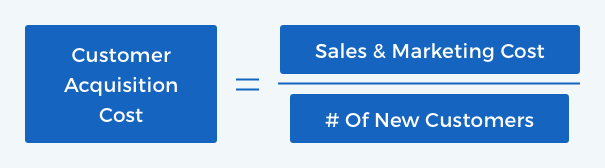
      Customer acquisition cost (CAC) is the total sales and marketing cost required to earn a new customer over a designated period. This is important because it assigns real value to your marketing efforts and allows you to measure your ROI.
      Displayed as a formula, it looks like this:
      customer acquisition cost formula
      So if a company spent $300K on sales and marketing, and generated 300 new customers in one quarter, their customer acquisition cost would be $1K.
      Note: The total marketing cost includes all program, software, and marketing spend, salaries, wages, commissions, bonuses, and overhead associated with acquiring new leads and customers within the time period you’re evaluating (month, quarter, year).
      Now that we’ve defined it, let’s look at how to acquire customers.

      The Best ways to acquire new customers with Digital Marketing

      The list here is not the be-all end-all how to acquire customers, but each item is a common way for digital marketers to grow their customer base today.

      Content marketing

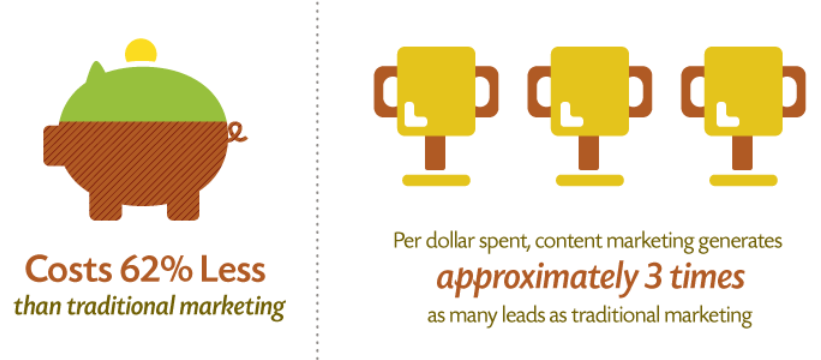
      Content is the foundation of advertising, because once you’ve published content (blog posts, ebooks, guides, videos, etc.) email, social media, etc. can promote it. It also generates about 3x as many leads as other marketing methods, and costs 62% less:
      acquire new customers content marketing
      Consistently publishing new content — and refreshing the old — keeps your brand relevant and shows prospects that you’re actively engaged with your industry. This is crucial in a world full of false advertising and plummeting customer trust.

      Highly targeted advertising

      If you’re not generating the number of new customers you want — or enough qualified customers — define and redefine your target audience down to the finest details:
      • Where do they live?
      • How old are they?
      • What do they do for a living?
      • What is their family makeup like?
      • What do they like and dislike?
      • What problems do they have and how can your product or service help?
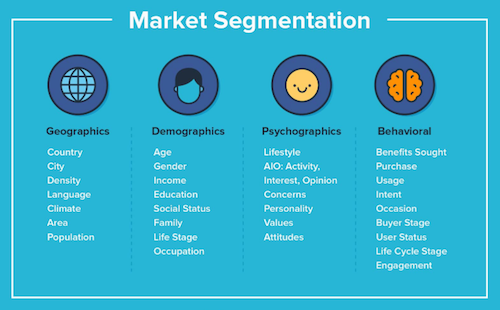
      Market segmentation can help:
      marketing segmentation types
      Retargeting old customers is a great place to start. While this might seem like customer retention, not acquisition, that’s not necessarily the case. If it’s been years since a customer was last active, many businesses won’t refer to that person as an existing customer anymore. Getting them back to your business is like re-acquiring them as a brand new customer. Use any old information you have on them (email, phone number, address, etc.), and reach out with an irresistible offer to earn their business again.

      Create a lead generating site

      Your website might look professional and offer a ton of useful information for visitors, but does it generate new leads and acquire new customers?
      It’s essential that, in addition to your website, you also have dedicated landing pages to capture contact information and fill the top of your sales funnel.
      Often, your landing page is the first and last thing people see connected to your business. Since you have less than five seconds to grasp their attention, make it stand out by following landing page best practices.
      An attention-grabbing headline, prominent form, and contrasting CTA button are just a few examples to follow. This Iterable landing page demonstrates all three:

      Focus on benefits over features

      Listing features can help sell your product to a certain extent, but it’s important you don’t overlook the customer experience. Highlighting your product’s benefits is a more direct way to relate to your customers and show them what they’ll gain by selecting your company over another.
      List the features briefly, but focus primarily on the benefits. Think about your customer’s problems and dig deep to explain how your product solves those problems. This helps you stand out and shows customers what makes your brand unique.

      Be present on social media

      If you’re not present on social media, you’re missing out on a huge market that your competitors are likely already taking advantage of.
      • The average internet user had 3 social media accounts in 2012, and now the average is closer to 7 accounts
      • 97% of adults (ages 16-64) log into at least one social network per month
      • Social media and messaging accounts for about 1 in every 3 minutes spent on the internet
      • Over 2 million businesses advertise on Facebook
      Having a social media presence doesn’t have to be expensive either. Creating a business account on Facebook, Twitter, Instagram, and LinkedIn is free. Simply join discussions and groups that pertain to your industry. Provide helpful answers to questions, and insight on various posts to make yourself known.
      Make your brand known on forums
      Being on question-based forums like Quora is huge. By answering questions and talking about your product, you can make yourself known as an industry leader and attract new prospective customers.
      When answering questions don’t just post a link to your content as it’ll likely be removed. That’s no way to establish trust anyway. It’s okay to include links within your answers on occasion, but every answer should still provide value without having to visit elsewhere.

      Offer deals and promotions

      People love discounts because they save money and feel like they’re getting access to something exclusive and limited. Some ideas for offering deals and promotions include:
      • Using your social media accounts to run coupon ads
      • Creating an email drip campaign that rewards subscribers for access to their inboxes with an exclusive offer
      • Throwing in low-stock items or items that are no longer made as freebies on orders over a certain quantity
      The most successful promotional campaigns also inspire sharing. When people share offers with their family and friends, they’re more likely to be interested since it’s coming from someone they know and trust, rather than an ad from an unfamiliar brand. It makes them more likely to redeem the offer and continue sharing with others too.

      Run giveaways

      If people aren’t buying your product, consider giving them something for free. That doesn’t mean give away thousands of products, but running monthly or weekly giveaways can certainly work to your benefit. Giving someone the feeling that they “won” something is a powerful way to make them choose your product over a competitor’s.
      Sweepstakes and contests are two different methods to choose from. A sweepstakes involves giving away something to a person selected at random (nothing is required from the person); while the winner of a contest is selected based on judgment.
      In comparison, contests tend to be more effective because participants get more involved and engaged. This is great for acquiring new customers because even if someone doesn’t win, they’ve likely put enough effort into their entry that they may be more inclined to make a purchase now.
      Both methods are great for building your email subscriber list because to enter you can require an email address. This way, you can send promotional emails if the contest didn’t entice them to make a purchase.

      Showcase testimonials

      One of the best ways to acquire new customers is to highlight existing ones. When you have proof that customers have a particularly positive experience, ask them to provide a testimonial in return.
      Infegy does this on their landing page:
      Whether the testimonial is a short quote, review, case study, interview, etc., it’s proof that you deliver on your promises and helps prospects feel more confident they can trust you.

      Keep track of the competition

      Actively monitoring competitor’s marketing tactics, backlinks and traffic, web design, social mentions, products or services, etc. is the best way to stay ahead of the game.
      This can be especially useful in acquiring new prospects because it puts you in prime position to swoop in and capitalize on any opportunities. For instance, if you know that a competitor has introduced an unpopular initiative, like a price increase, it may be the perfect time to step in and see if any of their clients are willing to jump ship.

      Host an event

      An increasing number of consumers like to actually experience brands, not just read about them online or get spammed by their ads. So much so that 89% of companies compete primarily on the basis of customer experience, versus only 36% in 2010.
      Hosting an event is a great way to do this as it gives potential customers the opportunity to meet your brand on a more personal level. Depending on your product or service, you can either host an in-person event where customers can meet you or host an online webinar where it still feels personalized — like you’re right in front of your audience.

      Ask for referrals

      What better way to attract new customers than to use existing ones? But instead of relying on existing customers to evangelize your brand on their own, encourage them with a referral program.
      The incentive can be a physical gift, a monetary reward, or a credit, just make sure it’s valuable to them. You can’t realistically expect valuable customer referrals without giving back something valuable in return.

      Make sure your SEO is up to date

      SEO complements content marketing efforts by optimizing content and making it easier for your target audience to find it. Rank high in SERPs and persuading people to click through is the ultimate goal here.
      SEO best practices involve creating indexable content that search engines can read, decipher, and index by:
      • Including your primary keyword/phrase in the title
      • Adding related alt text to your images
      • Uploading video and audio transcripts
      • Linking internally within your site
      • Speeding up your page load time
      SEO is a popular customer acquisition method because it’s relatively cost-effective. In fact, SEO and organic growth has shown to be the number one inbound marketing priority for many companies.

      A/B test everything

      A/B testing is crucial in determining which strategies and campaign components produce the highest numbers of conversions.
      To get the most out of your A/B testing efforts:
      • Mark each new test in Google Analytics
      • Have a standard time frame how long you run each test and how many visitors must experience both versions
      • Create a process for executive approval to announce the winner
      • Move on to the next element to test
      • Repeat as needed
      It’s important to test every facet of your campaign or strategy. For example, not just the landing page copy, but the page’s entire layout. The more you know about the performance of your efforts, the more control you have over the end results.

      Now that you acquired them, how do you retain them?

      Keeping a steady flow of returning customers is equally as important. Here are a few reasonsto focus on customer retention just as much as acquisition:
      • The cost of acquiring new customers vs retaining them is 5 times more
      • Increasing customer retention by 5% can increase revenue by 25-95%
      • The probability of selling to existing customers and new customers is 60-70% and 5-20%, respectively
      • 90% of satisfied consumers will purchase again
      Customer retention strategies will vary based on business model, audience, resources, and more, but here are several key qualities all of them should have:
      Convenience
      It’s hard to ignore something when it’s available at your fingertips, so make your products and services as accessible as possible. Identify your customers’ desires and behaviors, and create tools that empower them with convenience. For example, both Starbucks and McDonald’s have apps for customers to order ahead to eliminate the wait time on-site.
      Altruism
      Sometimes a brand inspires customer loyalty with their company beliefs, instead of their sales tactics. Many consumers are focused on the altruistic and environmental effects that their buying habits have because doing good is so important to them. Find something that people care about and position your brand around it.
      Personalization
      Execute customer service with an authentic human touch. Show you care by identifying your audience personas, communicating with them on their preferred channels, and adding personality to every interaction.

      For more information contact DentalLabSupport.com or call 1-888-715-9099 info@dentallabsupport.com