Monday, November 13, 2017

How to Run a Successful Lead Generation Campaign


One of the main objectives of running a successful lead generation campaign for your dental lab (and one of the most important) is to do just that, generate leads. The campaign process involves classifying prospective customers and qualifying their probability to buy in advance of making a sales call. The purpose of lead generation can vary from driving sales leads to something like increasing webinar registrations, but in the end they have the same goal and that is to get prospects to raise their hands. Before we go into how to build a successful lead generation campaign, we need to understand a few basic terms.

Basic Terms of a Lead Generation Campaign

  • Lead: A prospect that has some level of potential in becoming a client. The individual usually shows interests and provides his/her information to your firm.
  • Qualified Lead: A prospect that meets all of your firm’s qualifications and criteria necessary to be considered more likely to become a client.
  • Lead Generation: The initiation of consumer interest or inquiry into products or services of a your firm.
  • Lead Generation Campaign: The process of capturing and simulating interest in a service or product for the purpose of developing leads. This includes a strategy using a particular media source and an offer to create inbound leads.
  • Nurturing: Some leads qualify early on, while others may take more time. Many of your leads will need some nurturing through frequent communication until they are ready to be contacted by someone from your business development team.
  • Hard Offer: This is typically an offer for a service or product that usually requires the prospect to act immediately. Often times these offers are limited to a few people or may have an expiration date.
  • Soft Offer: This type of offer usually doesn’t require an immediate response. An example of a soft offer is an email newsletter subscription.
  • Lead Capture: The use of marketing automation systems, allowing marketers to gather contact information from web forms, landing pages and email campaigns.
  • Landing Pages: A page that a visitor can land at or arrive on in response to clicking on a link or offer.

Building Your Lead Generation Campaign

Imagine this scenario for a moment; you are at home when suddenly you receive a phone call from a local moving company. Earlier that day you filled out a form on their website. You input your name, phone number, zip code and services you are interested in. While on the website you also downloaded a guide on how to get ready for your move. In doing so, this local moving company generated a new lead, and that lead is you. With the information captured, they are now able to contact you with further value and information. That is how the lead generation process takes place. 
The process begins with several main components. These components are necessary in order to maximize the number of qualified leads that you receive. Below are a few components to consider:
  • A lead generating website: As the name implies, lead generating websites are meant to generate and nurture new business leads. There are variations on the types of leads a website might be looking for. For instance, one site may be focused on recruiting where another may be more interested in generating new business teaming partners.
  • A Customer Relationship Management (CRM) System: CRM systems are intended to collect information on prospects. The information you can gather in a CRM on your contacts can include their website, email, phone number, mailing address, content downloads and open opportunities you may have with them. Your firm can customize your CRM based on the information your firm needs to qualify your leads.
  • A Content Marketing Strategy: A strategic plan focused on generating and distributing educational content to your target audience on a consistent basis.  An end goal of your strategy could be to drive your audience through the content funnel, gaining their trust, having them view you as the expert, and then contact you when they are ready to buy.
  • A Content Calendar: A resource tool that marketing teams can use to plan all content marketing activity for both traditional and online marketing. The benefit of using a content calendar is being able to visualize and strategize how your content is distributed.

Generating Leads Through a Successful Plan

By understanding the basic terms and having all of the components that make up an online lead generation campaign, you can then start to develop your plan by going through these 5 steps. It’s important to know that your process will vary depending on your objective, target audience and use of media.
  1. Set your campaign objective: Your objective can vary based on the outcome that you want to achieve. You may want to start off by defining your goal by either the number of leads expected or revenue per lead. These are just a few examples of what your campaign objective could possibly be. In order to better define your objective you may want to ask yourself the following questions:
    • Who is your target audience?
    • How will you reach them?
    • What do you want them to do?
    • What call to action do you want to offer them?
    • What are you going to offer them?
    • How will you follow-up?
    • When will you will follow-up?
    • Who will follow-up?
    • What will you do or what will you ask when you follow-up?
    • How will you record and report on the results of the lead?
    • Who will you report these results to?
    • When will you evaluate your lead generation efforts?
    • What will you consider a success?
  2. Evaluate and select your campaign target: This may come from your current list of contacts that you have or you may want to focus on an entirely new target group for your lead generation campaign. Either way, make sure you have identified who those groups are and what their pain points and issues might be that your firm can answer with content.
  3. Determine your media outlet: While there are may different media outlets ranging from email marketing to eBooks and guides, our research has shown that firms generating more than 60% of their leads online are 2x more profitable than their competitors. Therefore, choosing an email campaign or holding a webinar would be an example of a great strategy for generating more online leads.
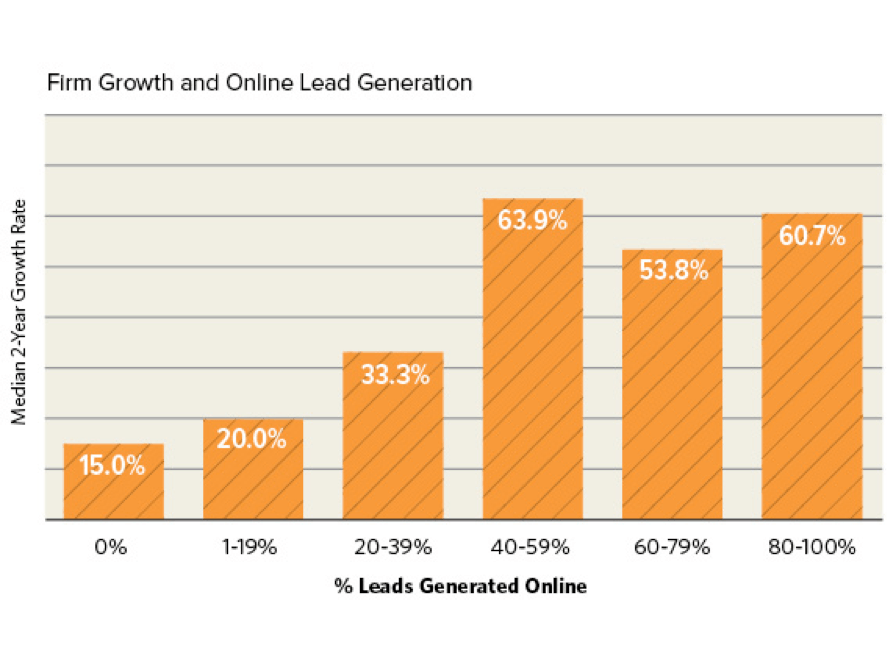
  4. Develop an offer: To reiterate, a lead is a prospective client who has peaked interested in your firm’s product or service. In order to identify these prospects in your list of contacts, you may want to send out an offer. This could be a free download to a guide, registration for a free webinar, etc.  When the lead responds to your offer, their information is captured. They are then pulled into your lead generation campaign where you will continue to nurture your leads until they are ready to close a deal.There are several main mechanics to creating an offer. First you must create a landing page where a prospect lands for a distinct purpose. This is usually prompted by an offer and a call-to-action in which the prospect is prompted to fill out a form. Your hard or soft offer respondents become, as what we at DentalLabSupport like to call, a “new hot lead.” There are several different places you can promote these offers such as on a blog, on a webpage, on social media, in an email…these are just to name a few.
  5. Create a communications strategy process: This includes what your follow-up process is going to look like. Strategizing how you will respond to your leads, what kinds of material will you share, who will contact them, and finally defining what your proposals will look like as well.
Looking at all the elements of a successful lead generation campaign can make your head spin a bit. So in conclusion, make sure your campaign includes a clear understanding of your target market, multiple media channels to capture and narrow down your leads, compelling offers, and a strong strategy that tracks performance. If you have all of these then you are good to go!  For more information about launching a successful Lead Generation Campaign for your dental lab, visit DentalLabSupport.com or call 1.888.715.9099.

Wednesday, November 1, 2017

Automating Your Emails Can Save Your Business Valuable Time


How do you communicate with current and future customers? No matter your industry, email is probably a core part of the equation. In fact, even in the face of newer alternatives, it has consistently been found to be the most popular form of digital communication across the globe.
At the same time, especially as your business grows, that same communication channel can also become difficult. Put simply, you will find yourself not having the time to send individual emails thanking new customers for their purchase or encouraging existing customers to come back.
Fortunately, you don't have to. A number of solutions now exist that can help you automate your emails, without losing the personal touch that makes email so effective. Find the right one, and set it up the right way, and email becomes a technology that saves you and everyone on your team valuable time.
The Core Benefits of Email Automation
Saving time, of course, is just one of the many benefits that automating your emails brings with it. In addition, consider:
  • Automated emails allow your dental lab to follow up in a more timely fashion. No matter when your customers make a purchase or request more information about your business, you can follow up almost instantly.
  • Automated emails introduce a measure of consistency in your digital communication. Everyone gets the same (though slightly customized) message, allowing you to create a more consistent and credible brand presence.
  • Automated emails, if you use the right software, are trackable. By evaluating your open and click-through rates, you gain a better idea of which messages work, and make adjustments as necessary.

What About the Personal Touch?
Many dental labs first considering this option for their needs are worried about losing the personal touch. If an individual sends a message, they can tailor it specifically to their audience's need. That's crucial, considering that personalized emails have significantly higher open, click-through, and transaction rates.
Fortunately, most email software now allows at least some degree of personalization. You can, for instance, dynamically substitute information you have about individual contacts into an email message. Variables such as each recipients' first name will increase the relevance for each of your marketing emails.
Another option is to segment your audience lists, increasing the targeting of your messages. For instance, you can sort your contact list according to residency, and send a different email to contacts in your state than you would to those living in a different state.
Marrying Automated and Individual Communication
Of course, some email messages will always need to be personal and individual. When a customer reaches out directly to one of your sales reps, or replies to one of your automated emails, the personal touch becomes too important to be automated. At the same time, that doesn't diminish the significant benefits of automation for other messages.
Thank you emails, for instance, lend themselves particularly well to this type of information. A confirmation of your audience's contact request or online purchase can easily be automated. Similarly, an automated lead nurturing flow can help you nudge new contacts toward becoming customers without needing much if any manual touches.
Finding the Right Software For Your Email Automation Needs
Considering its many advantages, automating your emails can save you significant time and improve your business efficiency. To make that possible, of course, you have to find a software platform that is easy to set up, affordable, and allows for some of the customization options mentioned above.
We want to be that software for you. DentalLabSupport knows how valuable time is especially for smaller dental labs, and has built its marketing automation and CRM platform specifically for lab owners like you. To learn more about our software, and start the implementation process, contact us by visiting DentalLabSupport.com

Thursday, August 10, 2017

5 ways to build your online presence

Image result for 5 ways to build your online presence

Much of the business and world now revolves around being online. Dentists not only make purchases online, but they also read reviews and look for information about dental labs that they are deciding to conduct business with. It is extremely important for Dental Labs to have a strong online presence if they are looking to remain successful.
  
One common misconception that people have is that building an online presence is difficult and that it takes a great amount of time. However, there are actually some simple things that you can do right now to begin building your online presence. In fact, here are 5 ways to build your online presence now that won't leave you waiting years for results.

Develop a Plan

The first thing that you need to know is exactly where you see yourself going. Like any major business move, it is important that you have a plan in place before you start working at building your online presence. Set up some goals that you can monitor and make sure that you record them on paper. This will allow you to be able to look back at the goals in the future in order to determine if they were in line with your plan.

Develop Content

Content is one of the most important things that any Dental Lab can offer when they are looking to build their online presence. The content that you produce should be valuable and entertaining to your consumers. The idea is to develop yourself as the voice in your industry. Avoid focusing solely on sales content. Instead, create content that your consumers will be able to take away from and apply the information to their daily lives.

Develop your Dental Labs Social Media Presence

There are plenty of social media sites available that you can become a part of. The best thing that you can do is to research where your target market is and spend time building up those sites first. Make sure that you are sharing content regularly through your social media sites as well as through your website. To help make this process easier, rely on a tool that will allow you to manage all of your sites from one location. There are sites available that you can use to create both social media updates as well as articles for your website, which will help you to save massive amounts of time.

Engage and Be Human

Consumers are looking for a business that they can relate to. It is important that you show them the face behind the company and help them to understand that you are a person too. This is difficult to do in an online setting, but you can make the process easier by engaging with your consumers directly. Comment on reviews and thank them for their feedback. Make sure that your replies and comments are always personal and that you are not giving what your consumers will feel is a generated response.

Track your Results

There is no better way to know if something is working than by tracking the results that you are receiving. Several tools are available online for this purpose and you should make sure that you are utilizing them to your advantage. Knowing what is working and what isn't will help you to tweak your plan and make it more effective for the future.
Developing a presence online is something that every dental lab should be striving to master, regardless of the size of the company. By doing so, you will find that you are able to better compete with other similar companies and that your customers are happier than ever before. To learn more about how you can improve your online presence, be sure to contact us. www.DentalLabSupport.com.

Wednesday, August 2, 2017

How Using Marketing Data Can Improve Customer Retention for Dental Labs

Marketing can significantly improve your customer retention

In too many dental laboratories, information exists in silos. Marketing departments seek to gather as much data as possible to convert members of your target audience into leads. Sales department repeat the process to convince leads that becoming a customer is a great idea. Then, the process starts anew in customer service.

But in reality, all of these departments can benefit from the same basic data. Especially if your goal is increased customer retention, you have to find a way to take advantage of the same data sets and maximize relevancy long after a web visitor turns into a lead. Using marketing data effectively, in fact, can significantly improve your customer retention.

The Importance of Customer Service in Dental Lab

It probably comes as no surprise to you that to succeed in business, customer service in the dental lab industry matters. Happy dentist's are brand advocates, sharing their thoughts on your brand with their peers in person and on social media. And, most crucially for the purposes of this post, customer service will improve your retention.
It's common sense: if a dentist is unhappy or has a question about your product or service, they'll seek your help. If they get that help quickly, they'll come away with a positive impression, and become more likely to buy from you again in the future. If they don't, they'll start to look elsewhere. That's why in a study by the Gallup Group, customers were nine times more likely to be engaged with a brand when they evaluated the service as "courteous, willing, and helpful."

Building a More Relevant Customer Service Effort

No customer service effort can be complete without personalization. If you a dentist calls with a question or complaint, you need to be able to pull up their information and make your answers as relevant to them as possible. Studies, in fact, show, that personalizing your customer service is the single most important variable for your audience.
Building that personalization, of course, can prove to be difficult. If your customer service department acts in an information silo, they may simply not be able to quickly and efficiently pull up customer data in order to make their response more relevant and accurate. That's why sharing marketing data across your organization is so crucial.

Providing Ample Access to Marketing Data

For most customer service operations, sales data seems to be the most obvious fit. After all, if you know which products your customers purchased and when, you can more easily answer their question and help to solve their problem.
But in reality, marketing data matters just as much. Especially if your marketing team uses Customer Relationship Management software, you want to know about past email communications and social interactions that may have preceded the initial sale. These communications can give you valuable insights into the customers mindset as well as the problem they were trying to solve by buying your product or service in the first place.
That's why providing your customer service team with access to your CRM is a crucial step in customer service (and ultimately retention) success. But of course, you still have to find a platform that actually gathers the right information, and helps you effectively share that information across your organization.

Using the Right Platform For Customer Retention Success

That's where LabCell  - Dental Lab CRM comes into play. Our software is designed specifically to be accessible by members across your organization, and also gathers the data you need to succeed in retaining existing customers. 
To learn more about our LabCell CRM, and how it can help you retain your existing customers, contact us at 1.888.715.9099 or visit us at DentalLabSupport.com.

Thursday, July 20, 2017

Dental Lab Lead Nurturing


By David H. Khalili
Lead nurturing is an important part of any inbound marketing campaign. After generating leads through the strategic use of content marketing and custom designed landing pages, you want to be sure that your leads actually turn into customers by providing them with regular messages that increasingly nudge them toward a sale. 
But of course, as is the case in any digital marketing initiatives, it's important to follow industry standards in order to be successful.  Here are 3 best practices that aid your lead nurturing efforts, with the help of CRM Software.

1) Segment and Target

A blank nurturing strategy can be dangerous. Put simply, sending the same emails to every one of your leads risks annoying them with content that is not relevant to their individual needs. Instead, consider segmenting your leads into different groups, and targeting individual messages specifically to these groups.
Segmenting, of course, begins with a custom landing page that asks your audience for more than just their name or email address. While you need to keep your sign up forms relatively short, asking one or two distinguishing questions helps separate your contacts into distinct segments. And once you set up that landing page, an effective CRM can do the rest. Now, you can set up targeted nurturing campaigns with emails directed only at the portions of your audience for which they are most relevant, ensuring a smooth experience for your leads and better chances of turning into customers.

2) Support your campaign with Content

You should also consider expanding your lead nurturing strategy beyond mere email marketing. While emails remain the lifeblood of any 'drip' campaign, what if you use them to promote content that is relevant to leads in a specific stage in the sales funnel?
Of course, this strategy can take some effort, as you will have to build content that relates to audiences who already know about you. But once you have this type of content, you can enrich your nurturing efforts by providing actual, valuable content rather than just a prompt to become your customer. It turns your emails into true nurturing efforts, rather than mere promotional messaging.

3) Time Strategy 

Finally, you should pay serious attention to when you send out your emails. Individual studies vary on the optimal amount of emails you should send your audience per month, but most experts generally recommend a median between once and twice per week.
Finding the right balance in your email send frequency is crucial: if you don't send nurturing emails often enough, your contacts will forget about you or go with a competitor instead. But do it too often, and you will land in too many spam folders and unsubscribe lists to be effective.
If you're looking which exact send frequency can work for you, your CRM can help. In fact, you can ran reports on your open, click-through and unsubscribe percentages, which in turn helps you understand how your send frequency impacts these success metrics. Thankfully, most CRMs allow you to easily make changes to your automation workflows that ensure you get the most out of your email nurturing efforts.
Nurturing your leads to becoming customers can be incredibly valuable, especially considering its low cost and the high degree of automation available through customer relationship management software today. But even with this software, you want to be sure that you follow the above best practices.
By segmenting your leads and targeting your messages, supporting your emails with content, and implementing the right send frequency, your lead nurturing efforts will make a significant impact in generating new customers. And if you're looking for a CRM that can help you throughout the process, contact us!  visit DentalLabSupport.com for more information or contact us by telephone 1-888-715-9099.

Tuesday, July 11, 2017

3 Ways Dental Labs can Better Communicate with Dentists

In order for dental labs and dentists to keep patients satisfied, they need to keep dental patients’ needs at the forefront of everything they do. So how can dental labs work with dentists to keep dental patients happy? Make communication easy, honest and enjoyable.

dental lab marketing


1) Offer Multiple Lines of Open Communication

Dental labs must not only open up multiple lines of communication - phone, email, website, social media, text - but must listen to what is being said. While this seems obvious, how many times have you had a dental case shipment sent back-and-forth because the dental materials didn’t match the dentist’s specifications? Listen to what the dentist needs, and map out what your dental technicians must do in order to meet those needs.

dental laboratories


2) Be Honest

Similar to #1 above, dental laboratories must be honest with their dentists about which services they provide and within what time frame. A simple "yes, we can do that" or "it's going to take one day longer than expected because of XYZ” goes a long way towards reassuring your client, and more importantly, enabling dentists to fulfill their promise to their dental patients.

dental lab support


3) Follow Up

The relationship doesn’t end once the shipment has been sent. Dental laboratories must have their dental team follow up with each dentist to verify that not only the dental case was received on time, but that it met the needs of both the dentist and the dental patient. Follow up with your dentists by asking “How did the material fit?” and “Was the patient happy?” 

dental laboratory marketing


Treat your work relationship like a personal relationship and you’ll see success in your dental lab. Open up lines of communication, listen to what’s being said, be honest about your abilities, and follow up in order to nurture your relationship with existing dentists. After all, dentistry is deeply personal work - so act like it!


dental lab support

4 Major Problems in the Dental Laboratory Industry


problems in the dental lab industry
Dental laboratory owners have been feeling the ripple effects of the dental lab crisis over the last several years as dental lab schools have slowly but surely shut their doors one by one. While not all dental lab schools have closed down, the smaller availability reflects the population’s interest in pursuing dental lab technology as a career.

dental labs

Dental lab owners have approached this problem of fewer dental lab schools in different ways. Some dental laboratory owners remained optimistic about the changing tides while other lab owners despaired and prepared for the worst by more carefully selecting their dental lab tech team. 

problems in dental lab industry

Regardless of whether you’re a dental lab owner who fought tooth and nail against the struggle or simply allowed your dental laboratory to adapt to the changing conditions, the fact of the matter is that fewer and fewer people choose to pursue dental lab technology year over year, and this has caused 4 major problems in the dental laboratory industry:

  1. USA dental technician certification is increasingly becoming unavailable
  2. Dental technician certification is either not required or unimportant to dental techs
  3. Offshore dental laboratories continue to expand, causing unequal competition with American dental laboratories
  4. Relationships between American dental technicians and dentists is seriously lacking 

4 major problems in the dental lab industry
As a result, currently large-sized dental labs have continued to increase while many medium- and small-sized labs - other than the boutique dental labs - have shut down.
What most dental lab owners don’t realize, however, is the one-two punch to the dental industry: lack of dental lab schools and lack of practical experience in dental education. 

Three or four years of dental school is not enough to prepare new dentists for real world dentistry because new grads severely lack real-life practice, and instead these dentists completely depend upon their dental technicians’ knowledge of technical aspects of all dental procedures. 

All four major problems within the dental lab industry combined with the dental education crisis are a double whammy: new dentists don’t yet have the right practical training, and there are less dental lab technicians available for them to rely on.

4 major problems in the dental laboratory industry
Now, how can we in the dental lab industry address and correct these issues? Check back next week for our blog post where we cover simple solutions to the 1st major problem in the dental laboratory industry!

By: David H. Khalili. CEO